
DISCHARGING, EVACUATING, CHARGING AND CHECKING — Point-7 Charging
HA-24prose procedureL.H.D. and R.H.D. models take slightly different refrigerant charges (~0.1 kg difference).
Point-7 — Charging
Engine-running charge sequence
- 1Charge refrigerant into system.Ensure that engine is off.
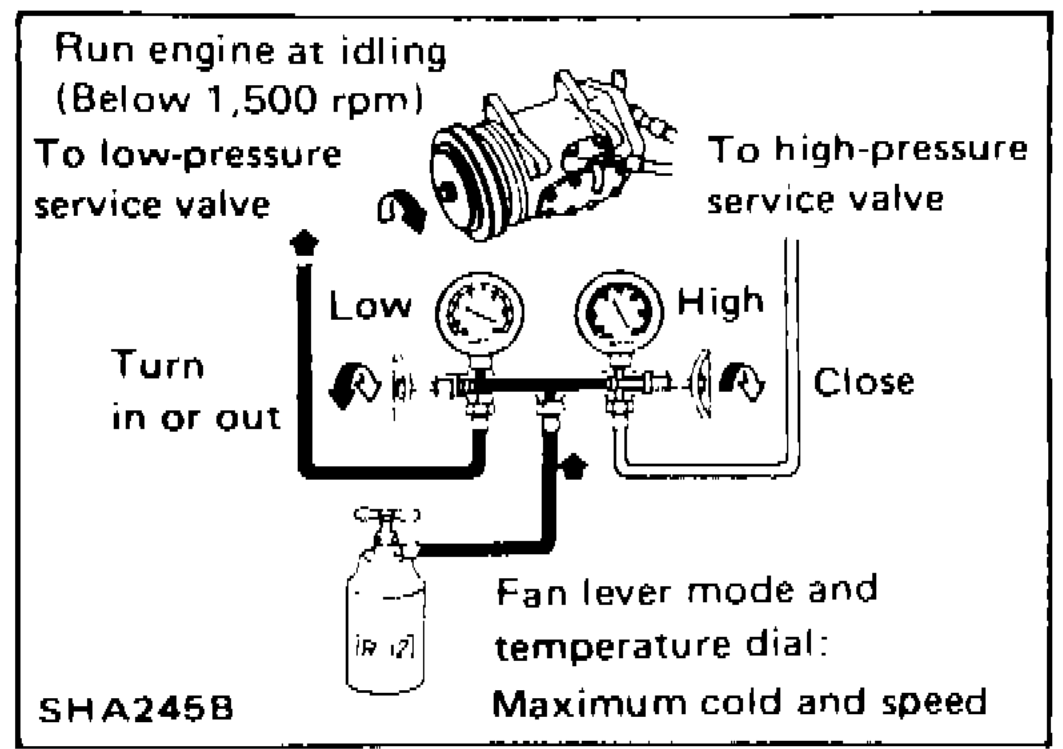
- 2Open low-pressure valve of manifold gauge and charge refrigerant into system. When refrigerant charging speed slows down, close high-pressure valve of manifold gauge and open low-pressure valve of manifold gauge and charge it while running the compressor for ease of charging.
 SHA245B
 - 3Start engine — Air conditioning system ON, maximum temperature set, maximum blower speed. Open low-pressure valve on gauge set, with can in upright position, and monitor sight glass. Charge is complete when sight glass is clear.
- 4Charge refrigerant while controlling low-pressure gauge reading at 275 kPa (2.75 bar, 2.8 kg/cm², 40 psi) or less by turning in or out low-pressure valve of manifold gauge.Be sure to purge air from charging hose when replacing can with a new one.
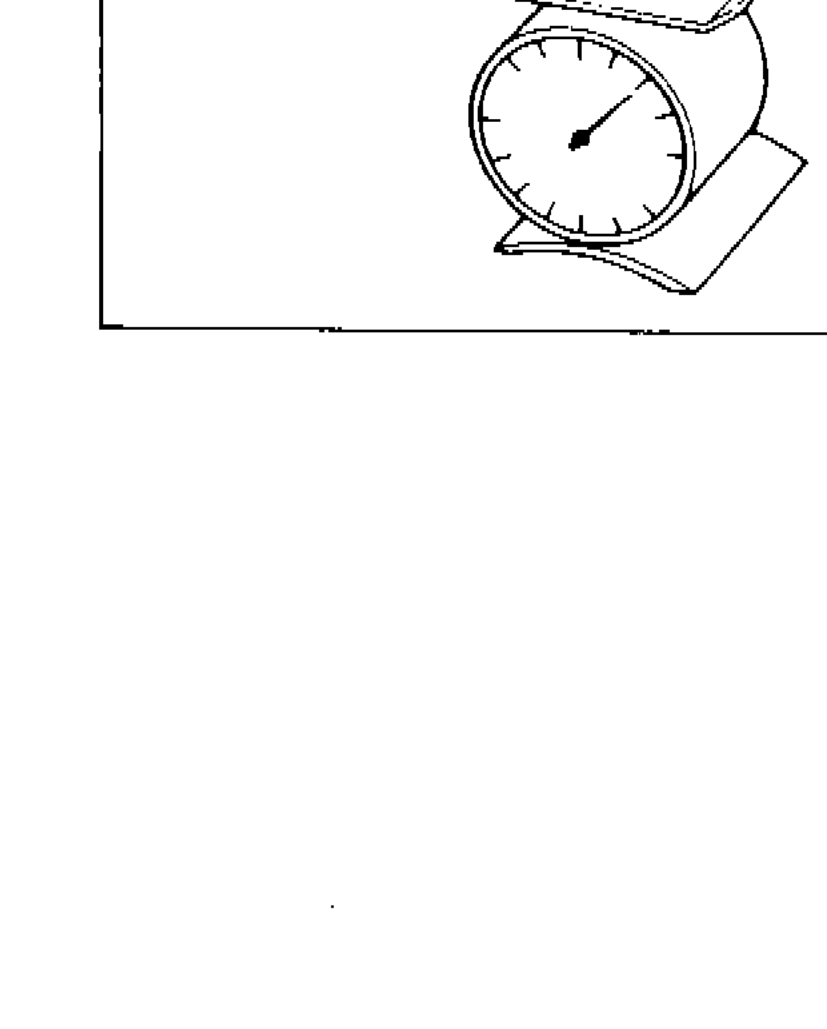
- 5Charge the specified amount of refrigerant into system by weighing charged refrigerant with scale. Overcharging will cause discharge pressure to rise.
 RHA504
IMPORTANT
Cycling clutch systems will produce bubbles in sight glass when clutch engages. Therefore, allow 5 seconds after clutch engages to determine if bubbles continue, and, if so, add refrigerant to clear sight glass.
WARNING
Never charge refrigerant through high-pressure side (discharge) of system since this will force refrigerant back into refrigerant can and can may explode.
| Specification | Value |
|---|---|
| Engine speed during charging | Below 1,500rpm |
| Low-pressure gauge limit during chargingStep 4. | ≤ 275kPa (2.75 bar, 2.8 kg/cm², 40 psi) |
| Refrigerant amount — L.H.D. modelBy weighing on scale (step 5). | 0.9 - 1.0kg (2.0 - 2.2 lb) |
| Refrigerant amount — R.H.D. modelBy weighing on scale (step 5). | 0.8 - 0.9kg (1.8 - 2.0 lb) |
Engine speed during charging
Below 1,500rpm
Low-pressure gauge limit during chargingStep 4.
≤ 275kPa (2.75 bar, 2.8 kg/cm², 40 psi)
Refrigerant amount — L.H.D. modelBy weighing on scale (step 5).
0.9 - 1.0kg (2.0 - 2.2 lb)
Refrigerant amount — R.H.D. modelBy weighing on scale (step 5).
0.8 - 0.9kg (1.8 - 2.0 lb)